What To Prepare
Describe the player’s age group, playing role, current environment and the question you want help with. A brief outline is enough for the initial enquiry; agree the sharing arrangements before sending footage or personal records.
 Neil Connor
Development
Practical help with matchday conversations, selection decisions and understanding a player’s progress.
01 In Practice
A parent may see disappointment after a match, while the coach is assessing progress across several weeks. Bringing those perspectives together starts with hearing how the player experienced the game. Ask what felt difficult, what they enjoyed and whether they want help working out a next step.
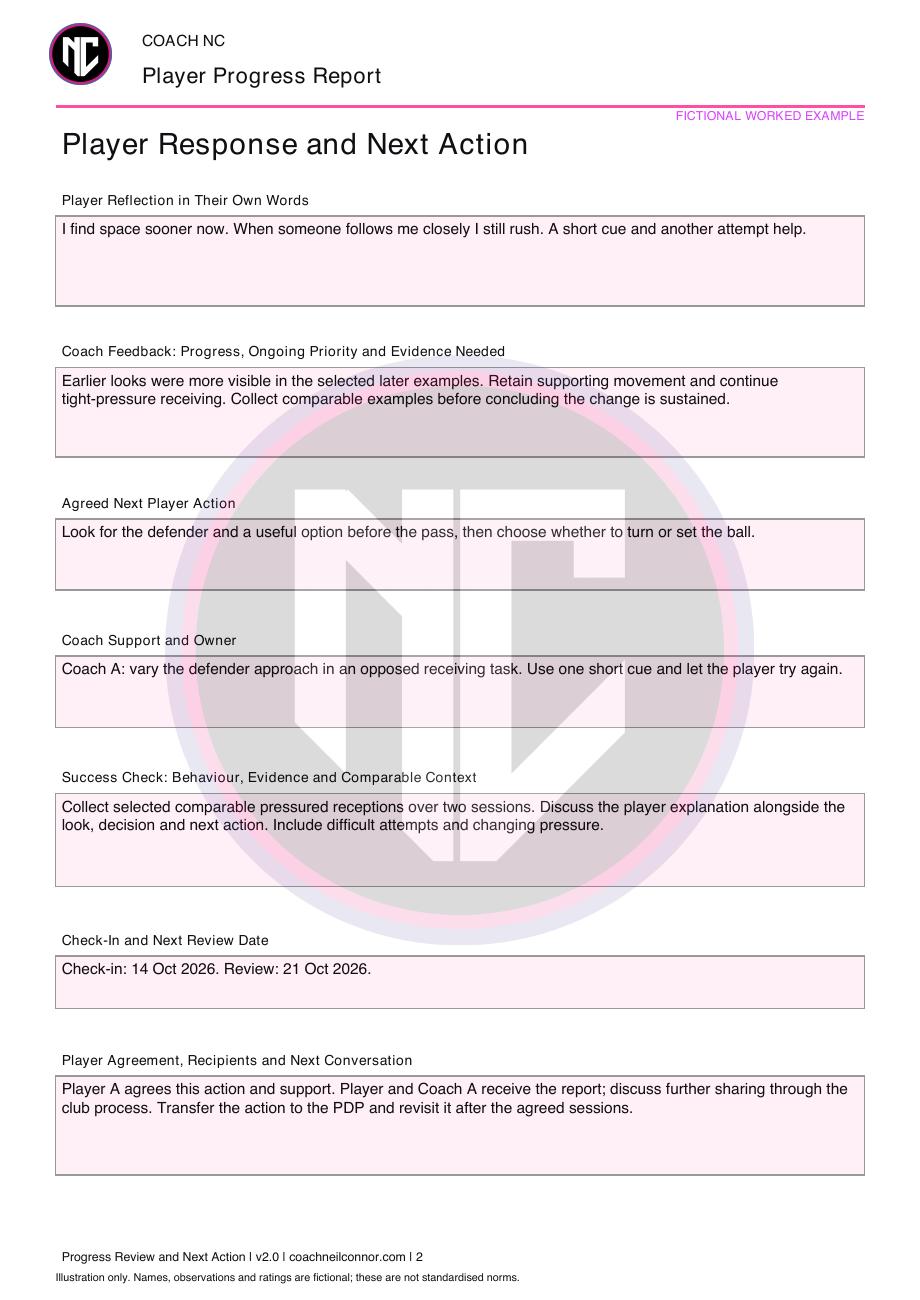
The progress-report example shows how the player’s own words can sit alongside coach feedback and an agreed action. At home, the useful question is whether the support helps the player attempt that action again. A report should support a conversation rather than become another judgement on every performance.
How I Can Help
An initial conversation can help clarify a development concern, prepare questions for a club review and identify appropriate next steps. Support keeps the player’s voice central and respects the coach’s role. Do not send identifiable player or health records through a general enquiry; agree the sharing process first.
For an agreed player review, the output brings together the examples examined, the player’s view and a small number of development priorities. We discuss what those priorities mean in practice, who can support them and when to review them. The report format, feedback conversation and any follow-up are agreed before work begins.
A parent-support conversation can instead focus on understanding a concern and preparing clear questions for the club. A written player report is included only when it forms part of the agreed service.
Getting Started
Describe the player’s age group, playing role, current environment and the question you want help with. A brief outline is enough for the initial enquiry; agree the sharing arrangements before sending footage or personal records.
For a younger player, agree parent or carer involvement and an appropriate way to include the player’s own view. Where support relates to the club’s programme, clarify the coach’s involvement and the intended use of the review.
Use the initial conversation to agree whether the support is suitable, the evidence required and the intended output. Confirm the fee, timetable and feedback arrangements before proceeding. Any follow-up review is agreed as part of the scope.
1-to-1 coaching is not currently available. Session blocks and season programmes are coming soon; bookings are closed. Player mentoring, analysis and development support can be discussed separately.
Describe the age group, playing context and support needed in your enquiry. Suitability and scope are agreed before work begins; examples on this site are not a universal programme for every player.
Where the review relates to the club’s programme, agree the coach’s involvement and how findings will be used. Support should help the player understand their next steps within that environment.
A brief outline of the question and playing context is enough. Footage, consent and secure sharing arrangements are agreed before identifiable player material is transferred.
02 Practical Examples
Ask what they noticed and whether they want to talk. Give them room to describe the game before offering your judgement. A question such as “What were you trying to do?” can open a conversation about decisions; accept it if they would rather talk later.
Listen first. Separate the decision from their identity, then agree a suitable time to ask the coach for specific feedback. Keep the discussion focused on the decision, the opportunities ahead and what the player can influence, rather than comparing them with teammates.
Ask for examples of change and one achievable next priority. Include the player’s own view rather than speaking for them. Agree what support is needed and when the conversation will be revisited, so the review ends with a practical action.
03 Document Examples
Use these documents when a player and coach are discussing progress. Families can use the agreed priorities to understand the support being requested, with sharing handled through the club’s process.
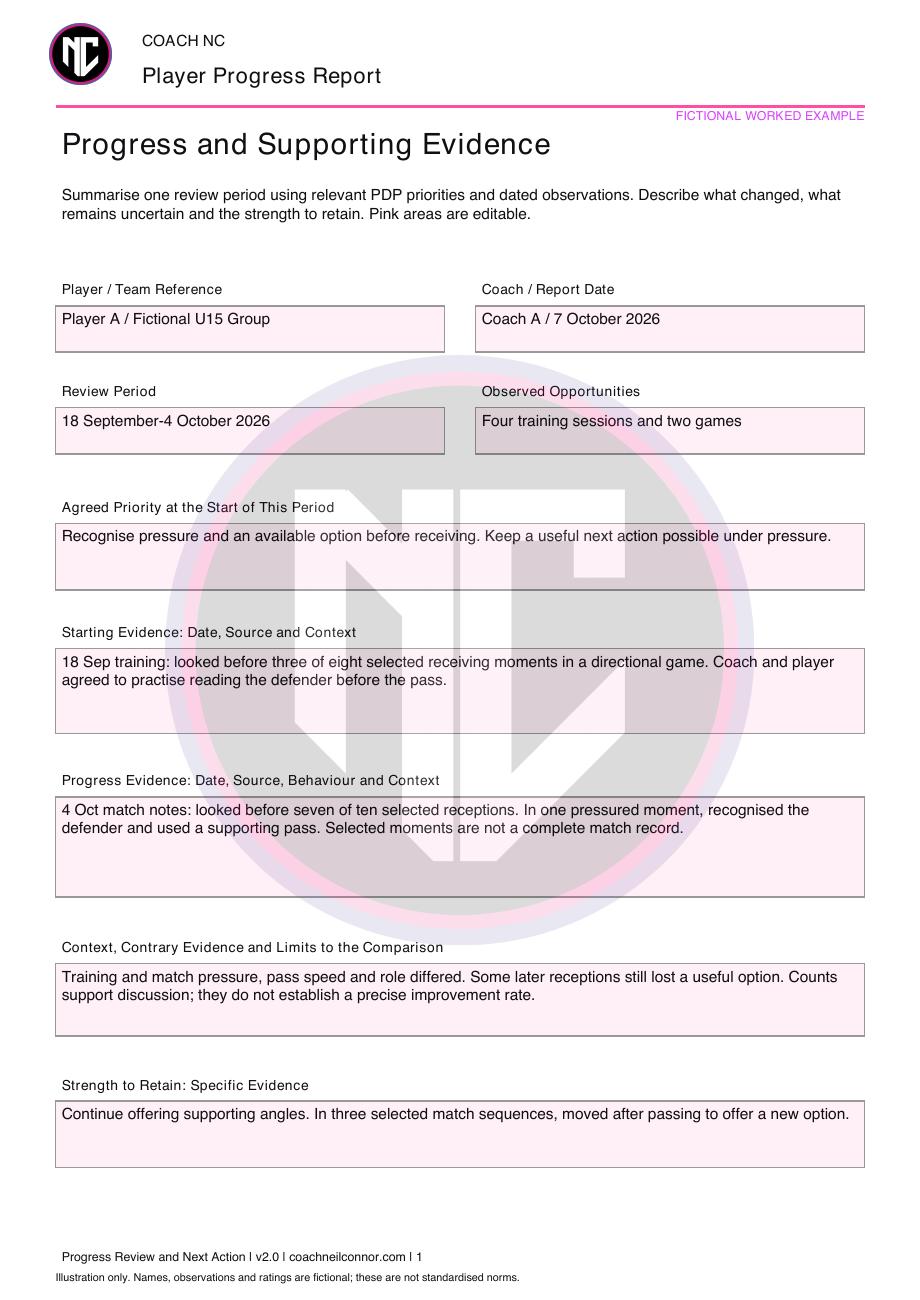
A shared record for discussing progress with the player and coach.
Use the report to prepare a shared discussion about the player’s progress. Ask for examples from training and matches, explain the context behind the observations and give the player space to describe their experience.
Leave the conversation with one clear priority and an agreed form of support. Parents can help by understanding that priority and asking about the player’s experience, rather than turning the report into a comparison with teammates. Agree when the next review will take place.
View The Pack ↗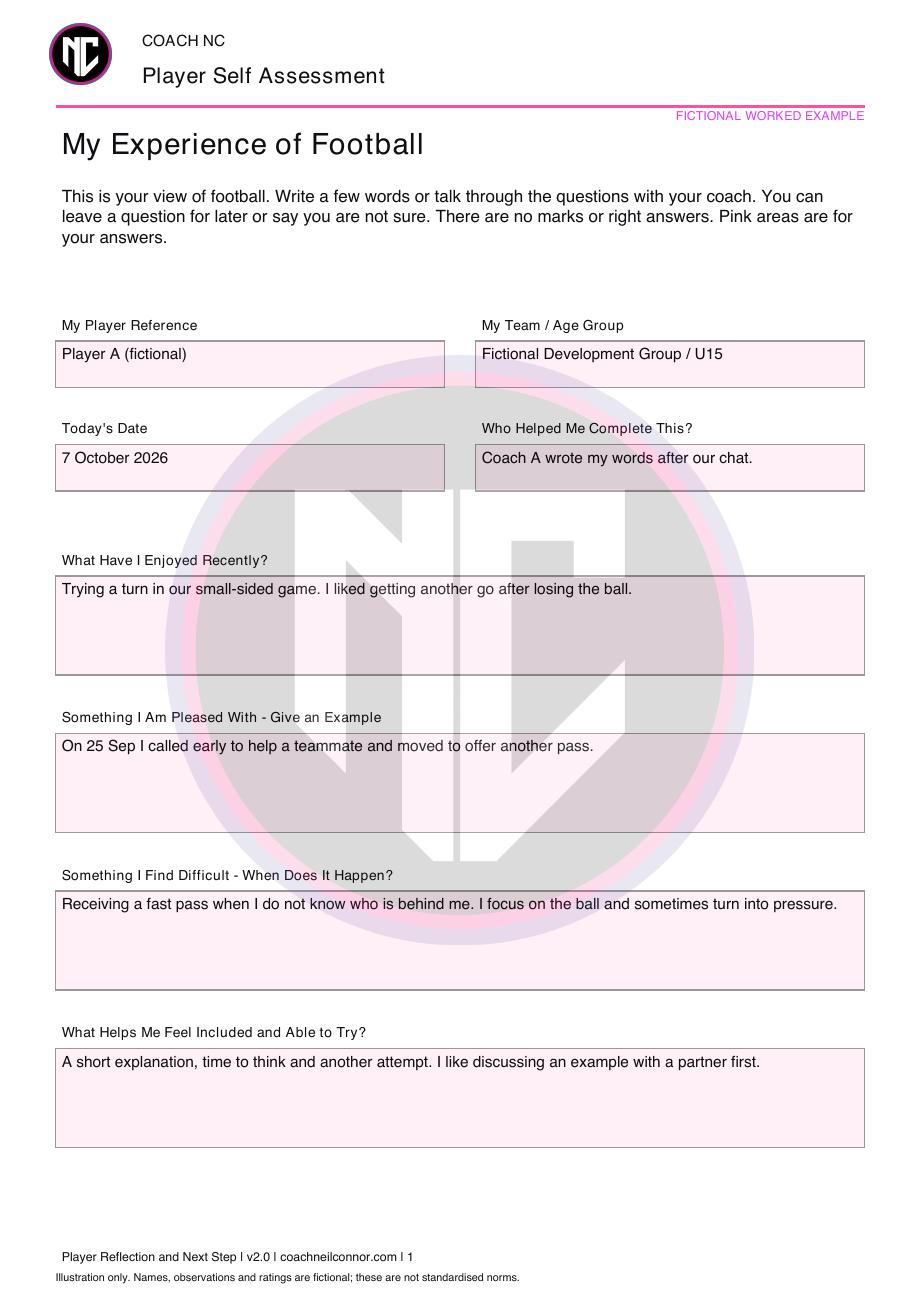
A starting point for the player to describe their own learning.
Give the player time to describe what they enjoy, what they find difficult and where they would like help. Use their responses to open the conversation; differences between the player’s view and the coach’s view are useful questions to explore.
Ask for a recent example and agree one practical next step together. Return to the player’s responses at the next review to understand whether their experience or priorities have changed. Their voice should inform the plan alongside the coach’s observations.
View The Pack ↗04 Related Blogs
These articles explore the two conversations families often find difficult: giving support without taking over, and responding to selection or setbacks.
Practical ways for families to support learning, enjoyment and player ownership.
Read Article Parent & Player SupportA calm framework for helping players respond to disappointment while protecting confidence and well-being.
Read Article05 Further Reading & Listening
The NSPCC and FA resources add practical perspectives on supportive parent behaviour and the social environment around the player.