Establishing a football academy involved more than building a coaching programme. My work connected player development with training access, commercial arrangements and the organisational structures needed to support delivery.
This anonymised account focuses on establishment from 2021 and organisational development during 2023–2025. It connects my football-development work with the operational decisions and leadership lessons that shaped the programme.
Role Founder and senior academy leader
Focus Football development, training access and academy operations
Period Establishment from 2021; organisational development during 2023–2025
The Challenge
The aim was to build a development environment that went beyond regular coaching sessions and match results. Technical and tactical learning needed to sit alongside physical, social and emotional development, consistent coaching standards, reliable facilities and clear communication with families.
As the organisation developed, the challenge widened: the programme also needed financial visibility, clear responsibilities and dependable operational arrangements to support its longer-term delivery.
My Responsibility
As a founder and senior academy leader, my contribution extended across football development, training infrastructure and commercial and organisational work. I helped establish the development approach and was directly involved in negotiating facility access and addressing issues affecting the training environment.
I also supported operational continuity during periods of financial difficulty.
Decisions And Delivery
I helped develop an approach considering the player’s technical, tactical, physical, social and emotional needs. Alongside the football work, I negotiated training arrangements covering weekday sessions, weekend provision and seasonal requirements.
My involvement in formal organisational arrangements included responsibilities for financial decisions and reporting. The practical objective was to connect the programme’s ambitions with the facilities, schedules and management information required to deliver it.
Planning For Employee Coverage
In 2024, I began the process of ensuring employees were covered under SAT and IMSS arrangements. This brought employment responsibilities into the academy’s operational planning, alongside coaching delivery and the training environment.
The increased cost was budgeted for through full-day camps, skills camps and merchandise development and sales. My role was to connect that employment-cost commitment with the activities intended to support it financially.
This describes the process I initiated and the budgeting approach. Completion of employee registrations and the financial effect are not presented as verified outcomes here.
Facility Standards
In October 2025, I raised concerns about training-surface conditions and delays to anticipated improvements. I treated the training environment as both a player-welfare responsibility and an operational issue affecting delivery and families’ confidence.
I sought clearer accountability between agreed improvements and commercial arrangements.
Evidence
The supporting material identified in my account includes corporate records, 2023 and 2025 facility agreements, operational correspondence and communications concerning the training environment. My CV records academy growth from three to more than 120 players.
This account describes responsibilities, arrangements and actions. Those records have not been independently reviewed for this website, and the growth figure is CV-reported. Improvements in retention, coaching quality, revenue or player progression are not attributed to the work without the relevant evidence.
What I Learned
A clear football vision and documented responsibilities are necessary, but they do not guarantee effective governance. Financial visibility, decision-making authority, internal controls and follow-through need to work in practice as the organisation develops.
The experience strengthened my view that a sustainable academy needs both a football-development framework and an operational governance framework. Its systems should protect the organisation, its people and its objectives even when relationships or circumstances become difficult.
Applying The Learning
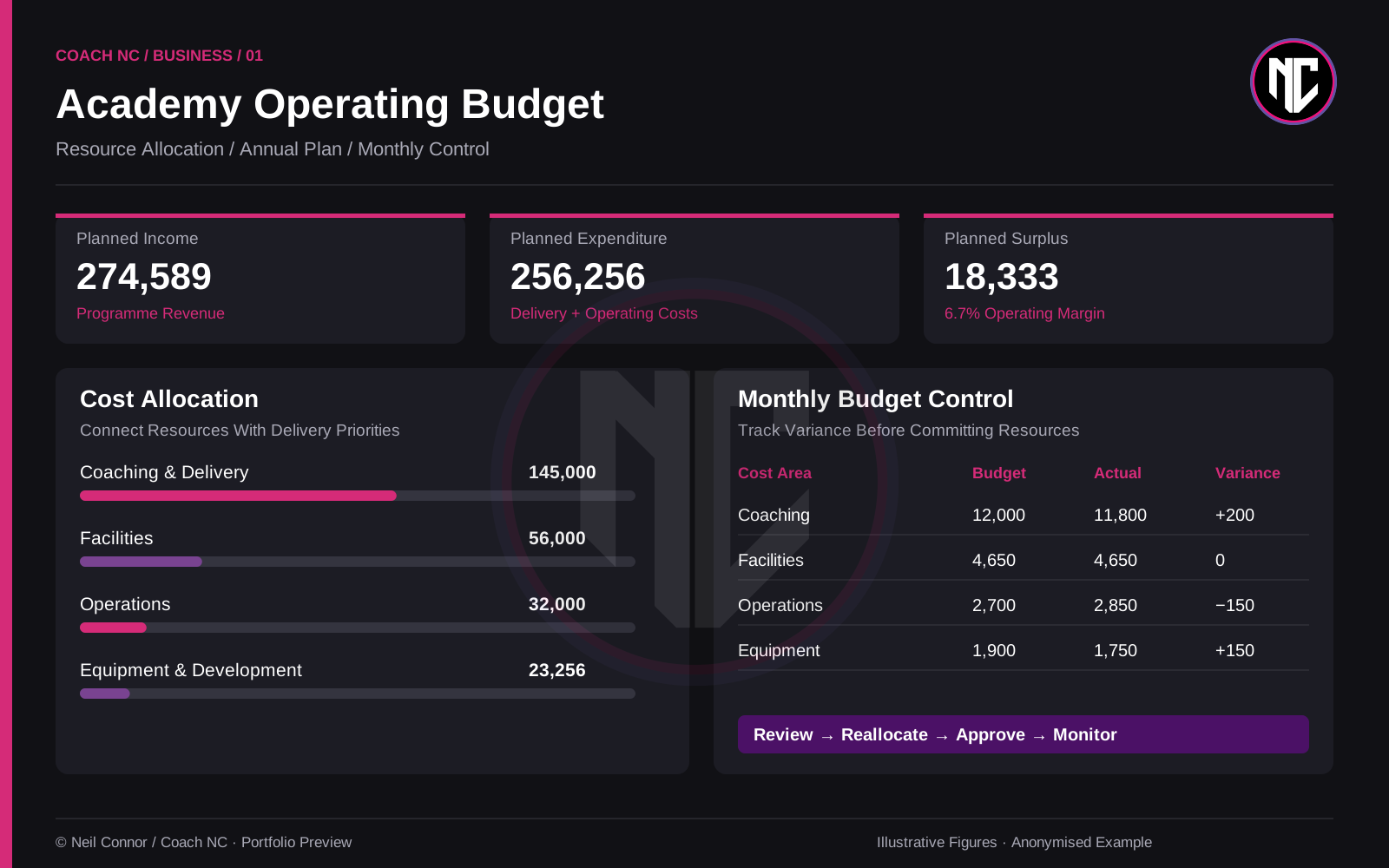
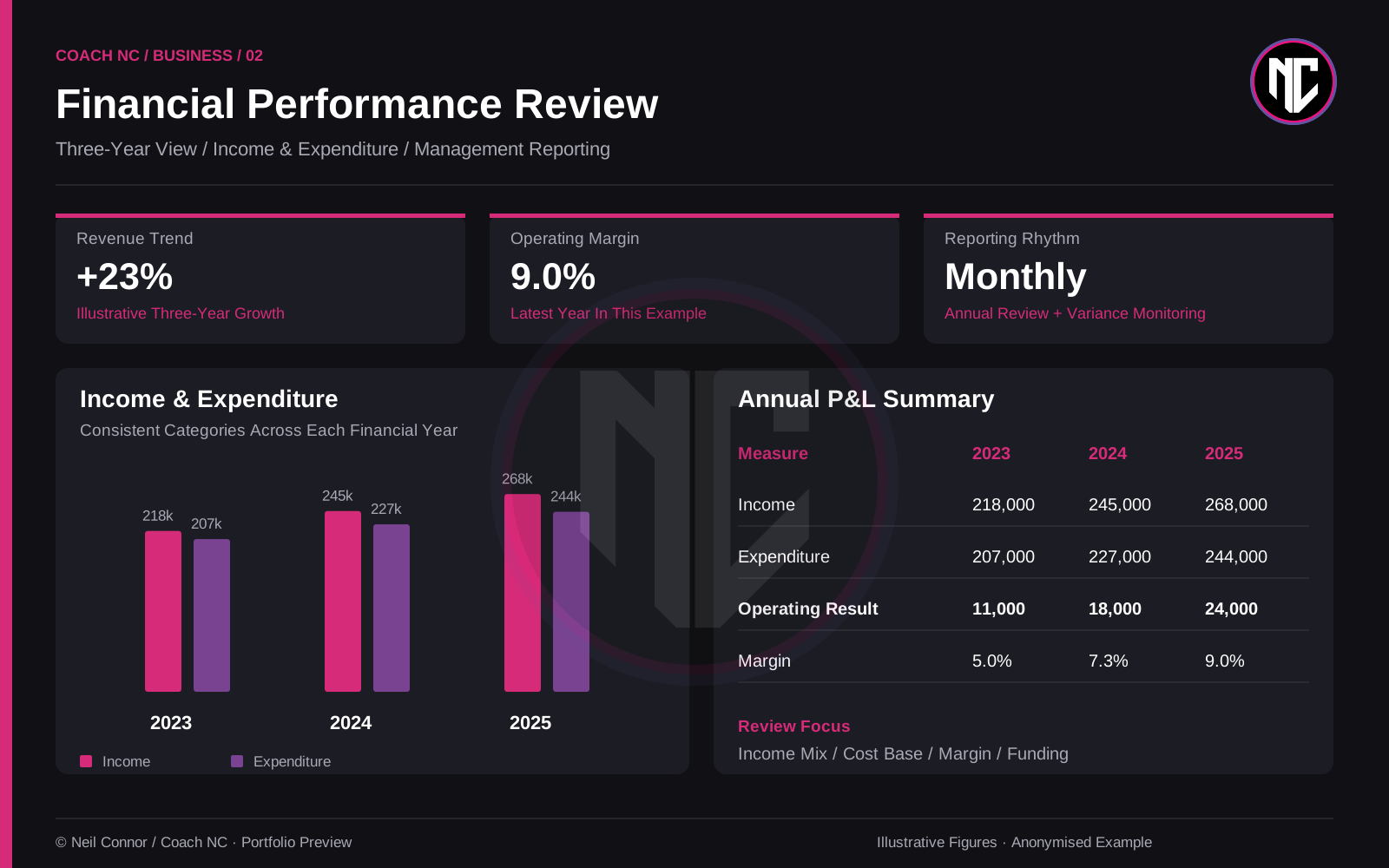
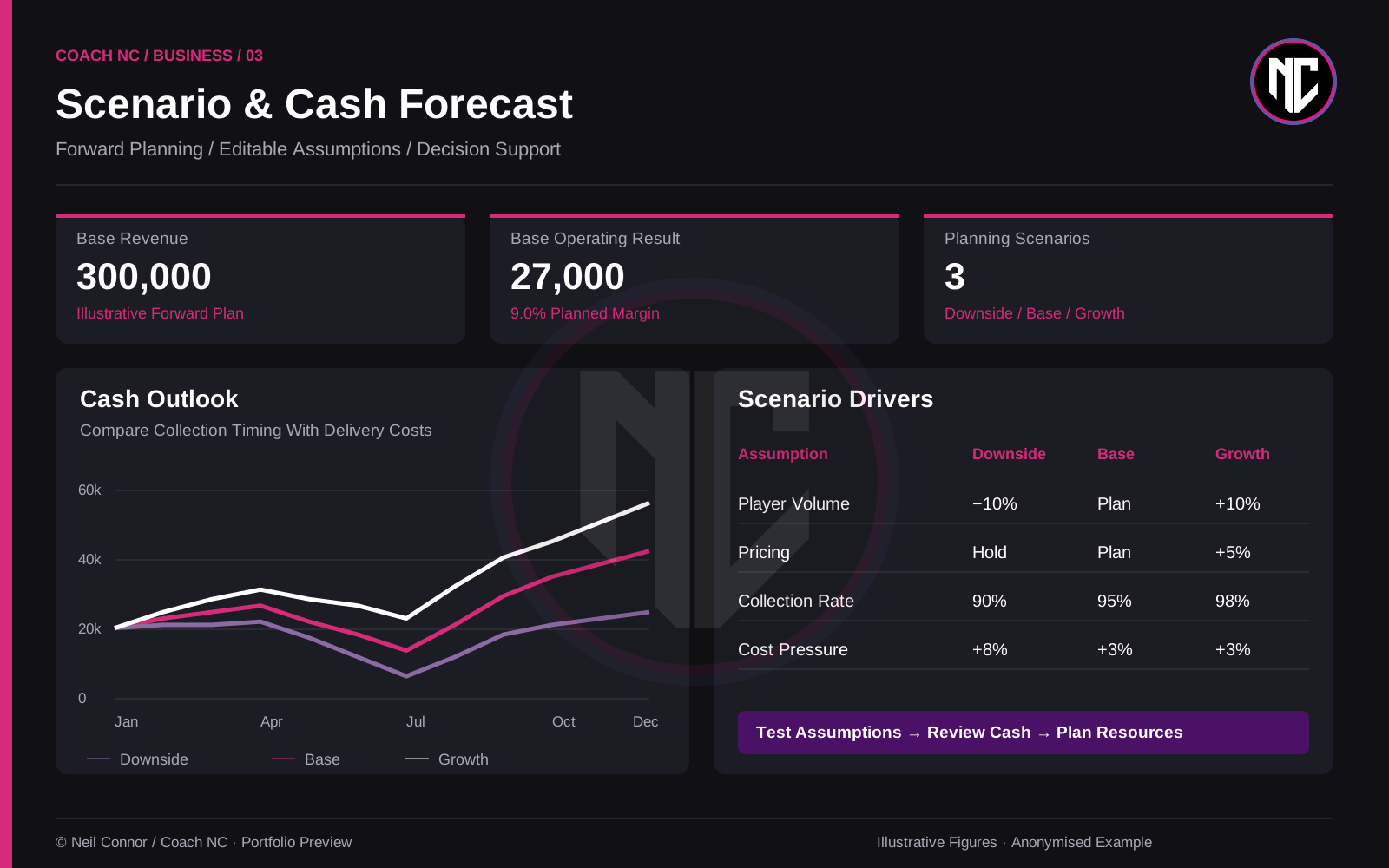
I approach programme development by connecting football priorities with the operating plan: who is responsible, what resources are required, what evidence will be reviewed and how decisions will be recorded. The budgeting, reporting and forecasting examples below show how those questions can be organised for management review.
Explore Financial Planning Examples ↓Discuss Academy Methodology Support ↗