
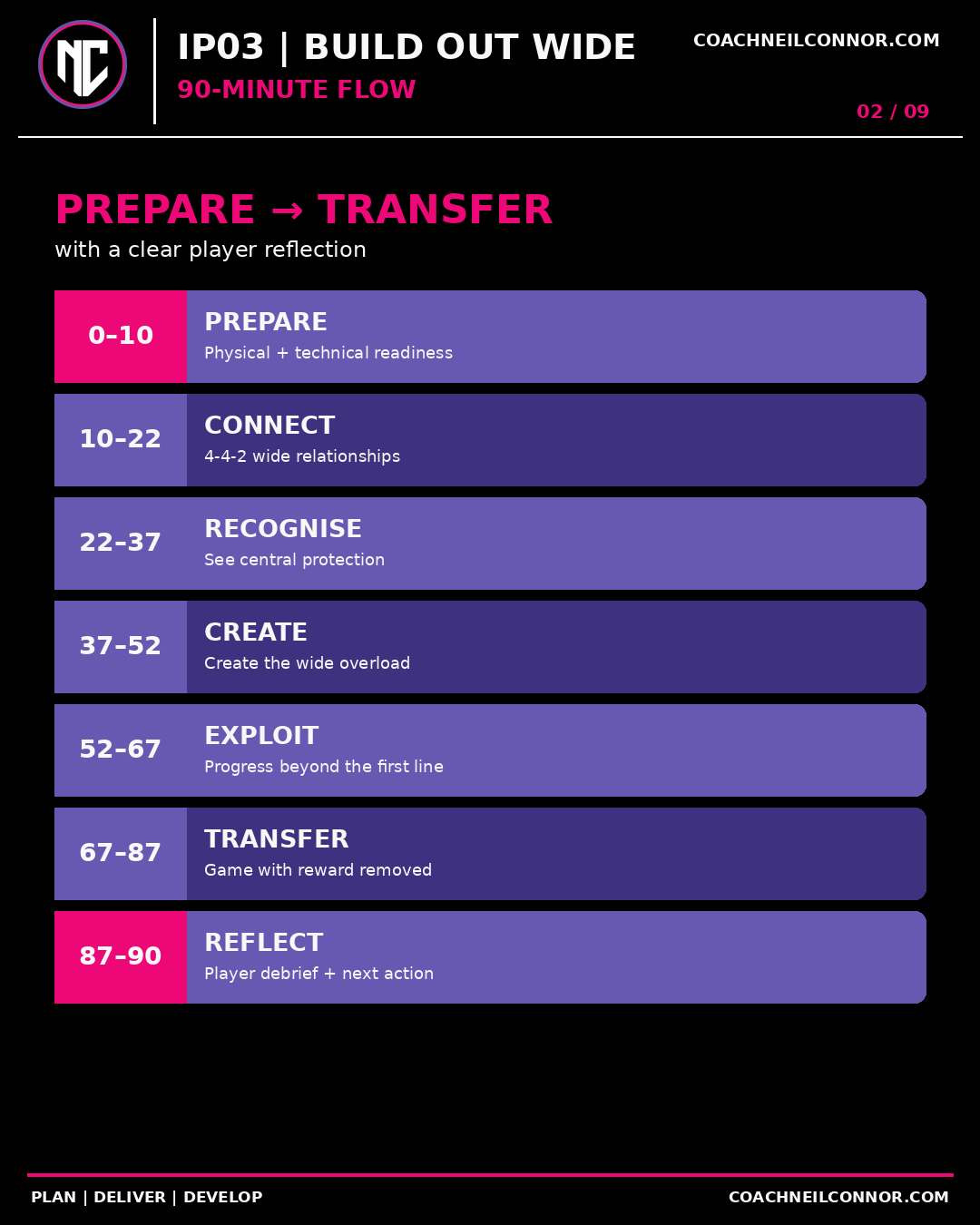
Session timeline
| Time | Stage | Practice type | Duration |
|---|---|---|---|
| 0–10 | Prepare | Physical preparation | 10 min |
| 10–22 | Connect | Specific practice | 12 min |
| 22–37 | A — Recognise | General practice | 15 min |
| 37–52 | B — Create | General practice | 15 min |
| 52–67 | C — Exploit | Small-sided game (SSG) | 15 min |
| 67–87 | Transfer | Small-sided game (SSG) | 20 min |
| 87–90 | Reflect | Reflection | 3 min |
Practice overview
The five vertical lanes are positional references, not movement restrictions. The C outside the pitch represents the coach and is excluded from player totals. Common players support whichever team is in possession.
Physical preparation — Prepare
Free · Physical preparation · 10 minutes
Inside-to-outside movement sequence · Adaptable
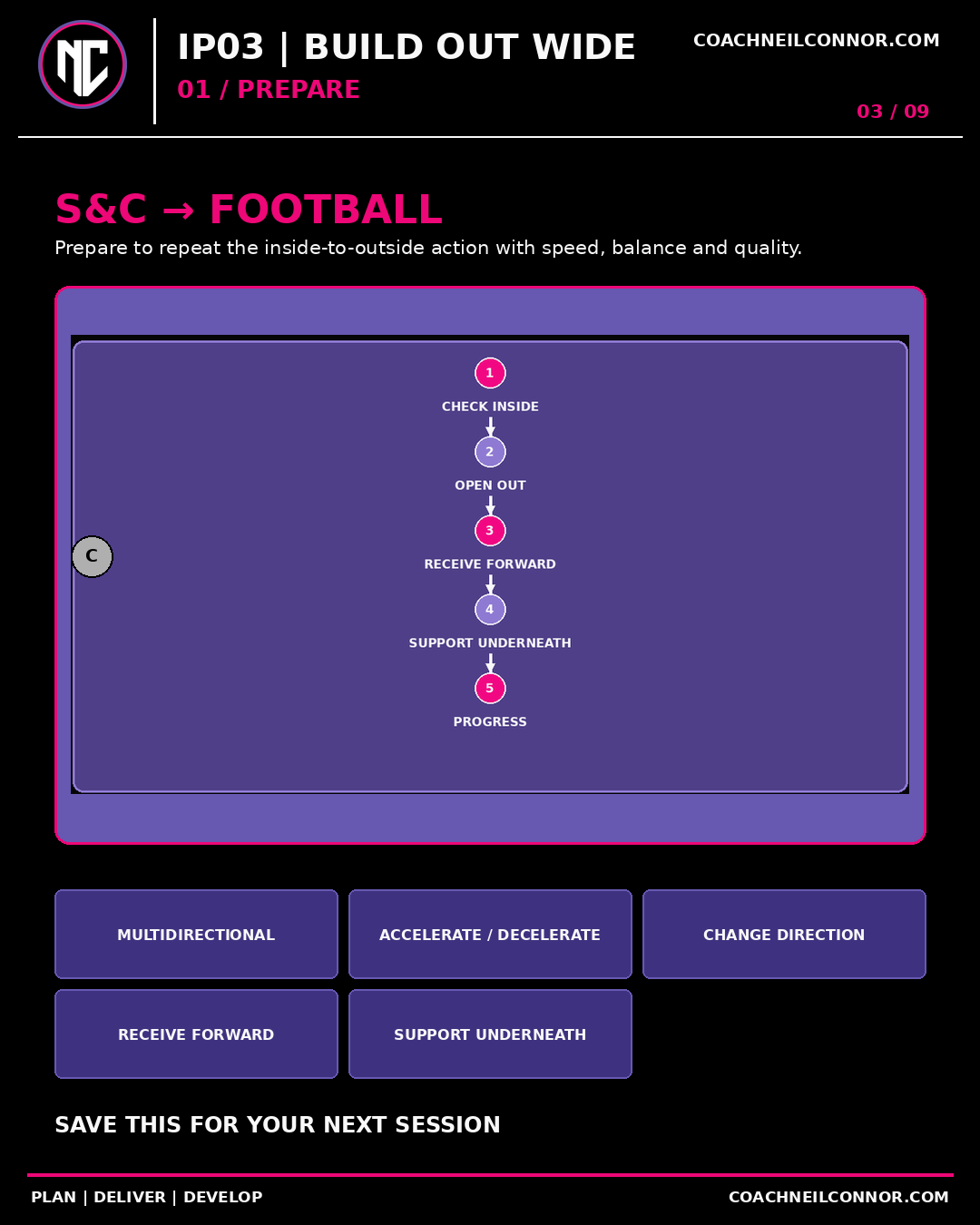
Adapt the distances, speed and work-to-rest ratio to the group.
Prepare the movement pattern that will appear throughout the session: check inside, open out, receive forward, support underneath and progress.
Movement focus
- Work multidirectionally and control the change of direction.
- Accelerate to create separation, then decelerate to receive with balance.
- Receive on the move and connect the supporting action underneath.
Position-specific work — Connect
Free · Specific practice · 12 minutes
4-4-2 positional relationships · Adaptable
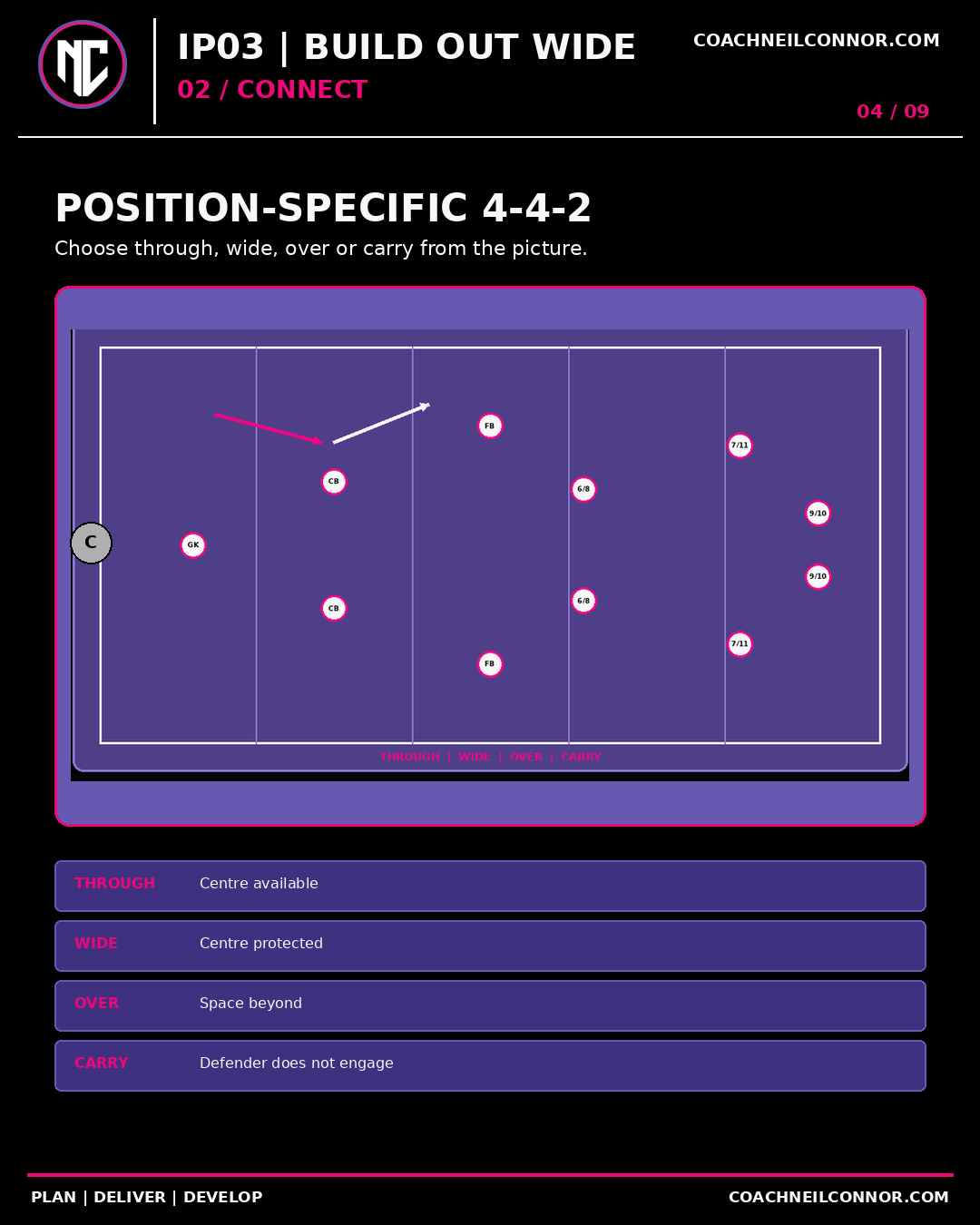
The 4-4-2 is a relationship reference; use both sides and adapt the positions to the available players.
Use the 4-4-2 reference picture to connect the goalkeeper, centre backs, full backs, central midfielders, wide players and forwards.
Decision picture
- Play through when the centre remains available.
- Play wide when central access is protected.
- Play over when space appears beyond the first line.
- Carry when the defender does not engage.
Practice A — Recognise
Free · General practice · 15 minutes · Part A of 3
6v6 + 3 common players · 35 × 40 m
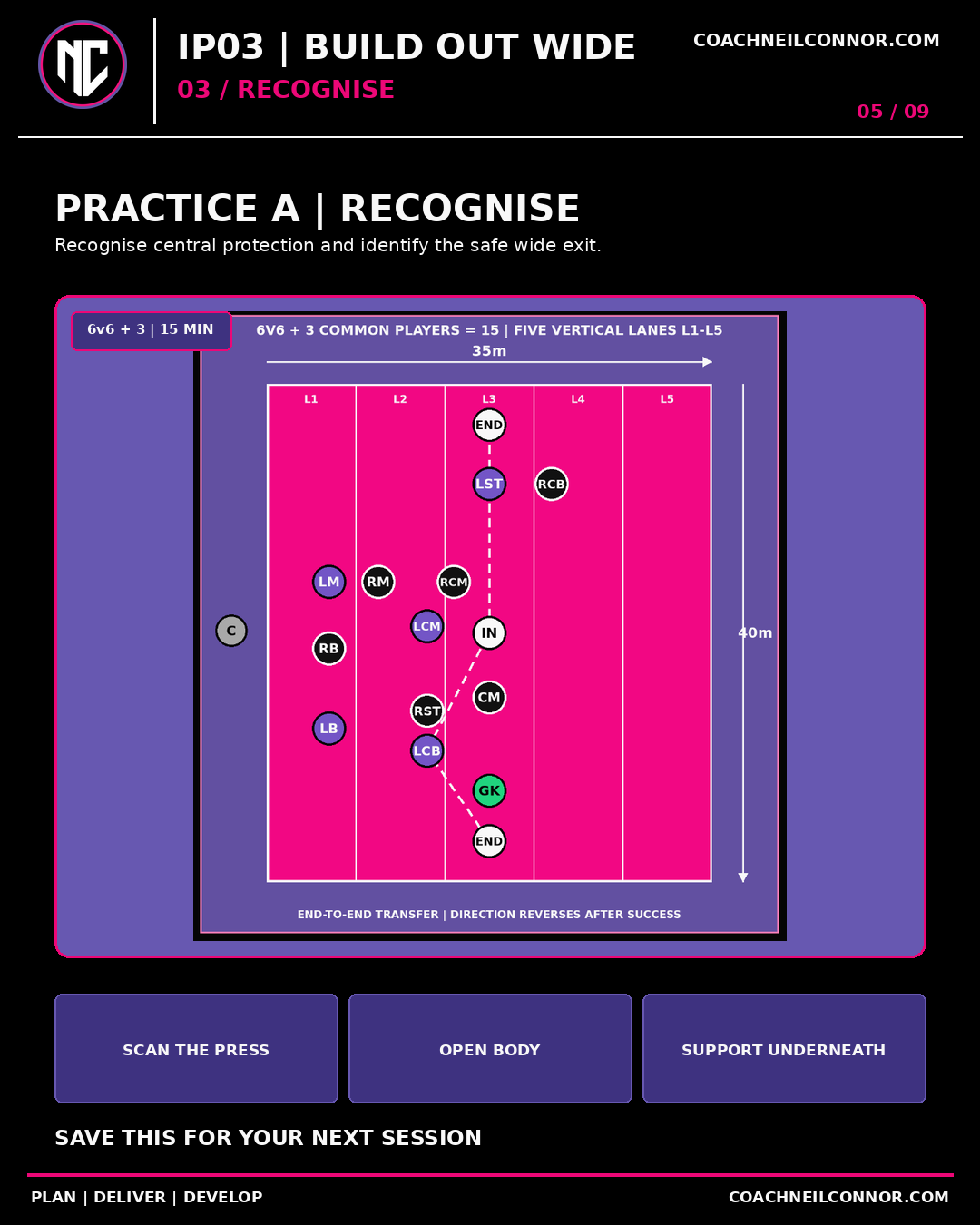
The possession team reads the press, recognises central protection and finds the safe wide exit before transferring to the opposite end.
Coach the recognition
- Scan the pressure before receiving.
- Open the body to see the next line and the wide exit.
- Support underneath so the ball can travel outside without becoming trapped.
Practice B — Create
Free · General practice · 15 minutes · Part B of 3
7v6 + 3 common players · Quarter field · adaptable
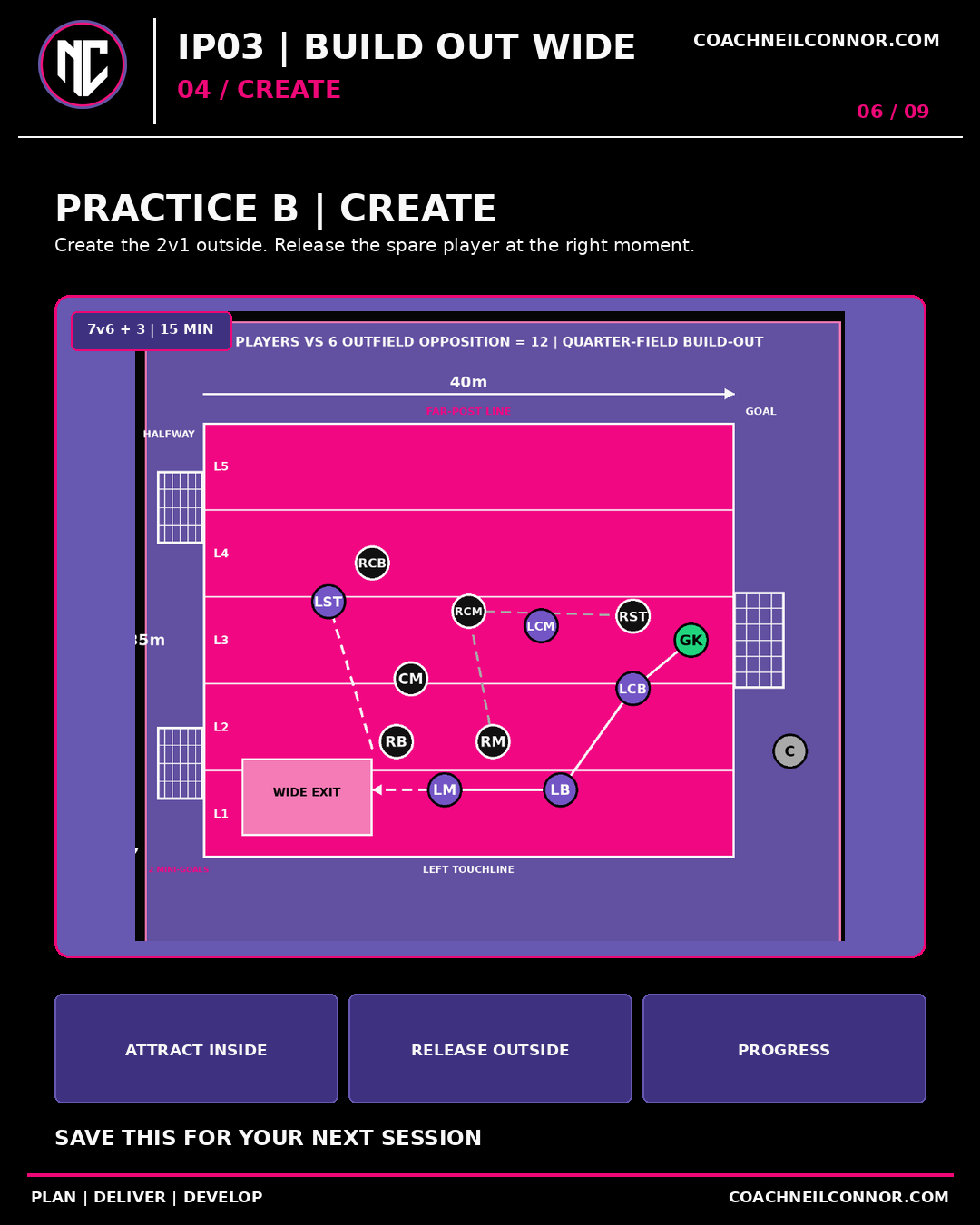
The attacking team attracts pressure inside and creates the 2v1 outside. The spare player should be released when the defender commits, not simply because the wide pass is available.
Coach the overload
- Use inside positioning to move and fix the opposition.
- Time the outside support so the spare player can receive facing forward.
- Progress after releasing wide rather than circulating without purpose.
Practice C — Exploit
Free · Small-sided game (SSG) · 15 minutes · Part C of 3
7v6 + 2 goalkeepers · 35 × 40 m
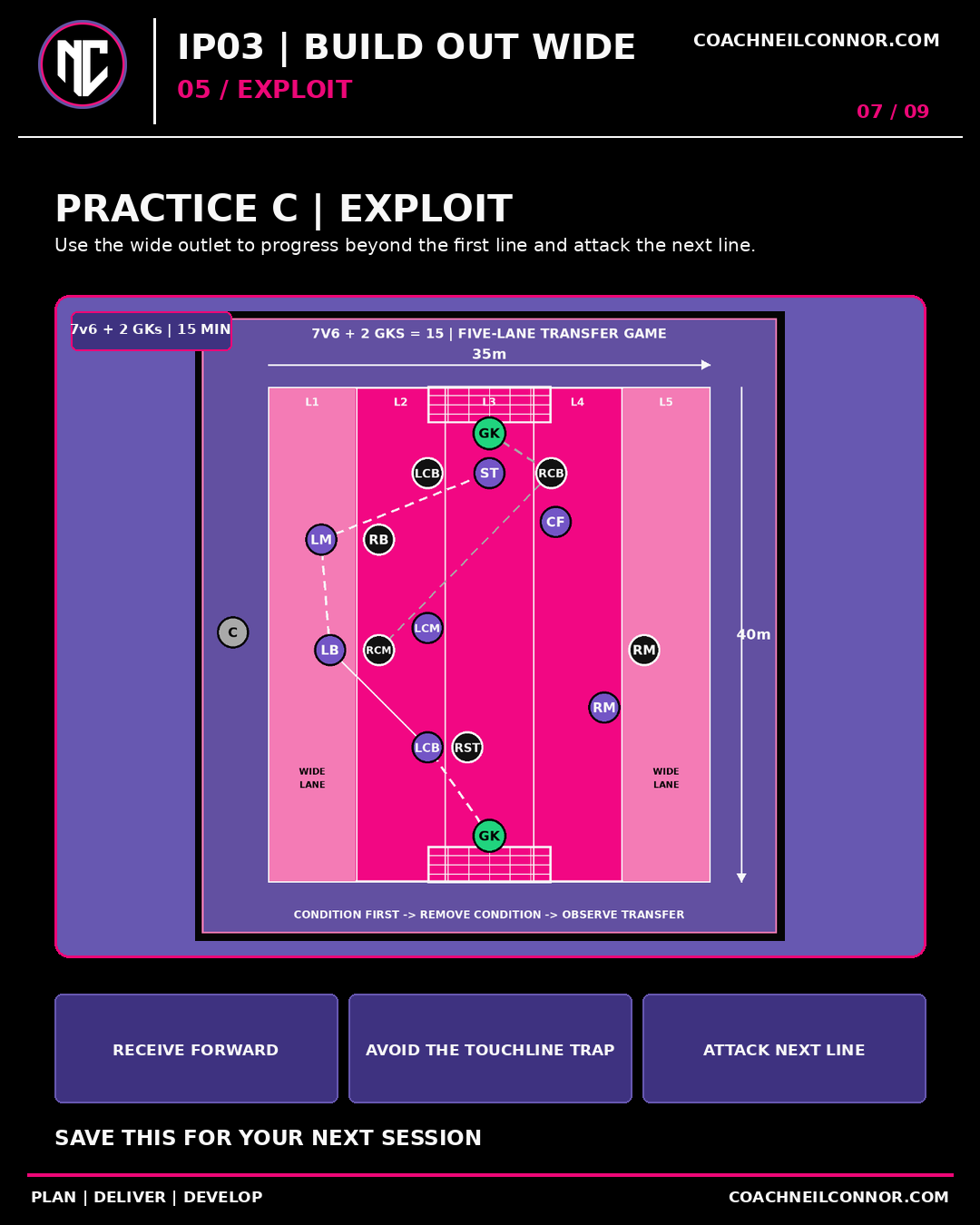
The five-lane directional game rewards the team for finding the outside route and then attacking beyond the first line. Wide access begins the action; it is not the end of it.
Coach the next action
- Receive forward whenever pressure and body position allow.
- Avoid being held against the touchline by supporting inside and underneath.
- Attack the next line quickly once the wide player has created the advantage.
4-4-2 game — Transfer
Free · Small-sided game (SSG) · 20 minutes
7v7 + 2 goalkeepers; adapt to attendance · 35 × 40 m
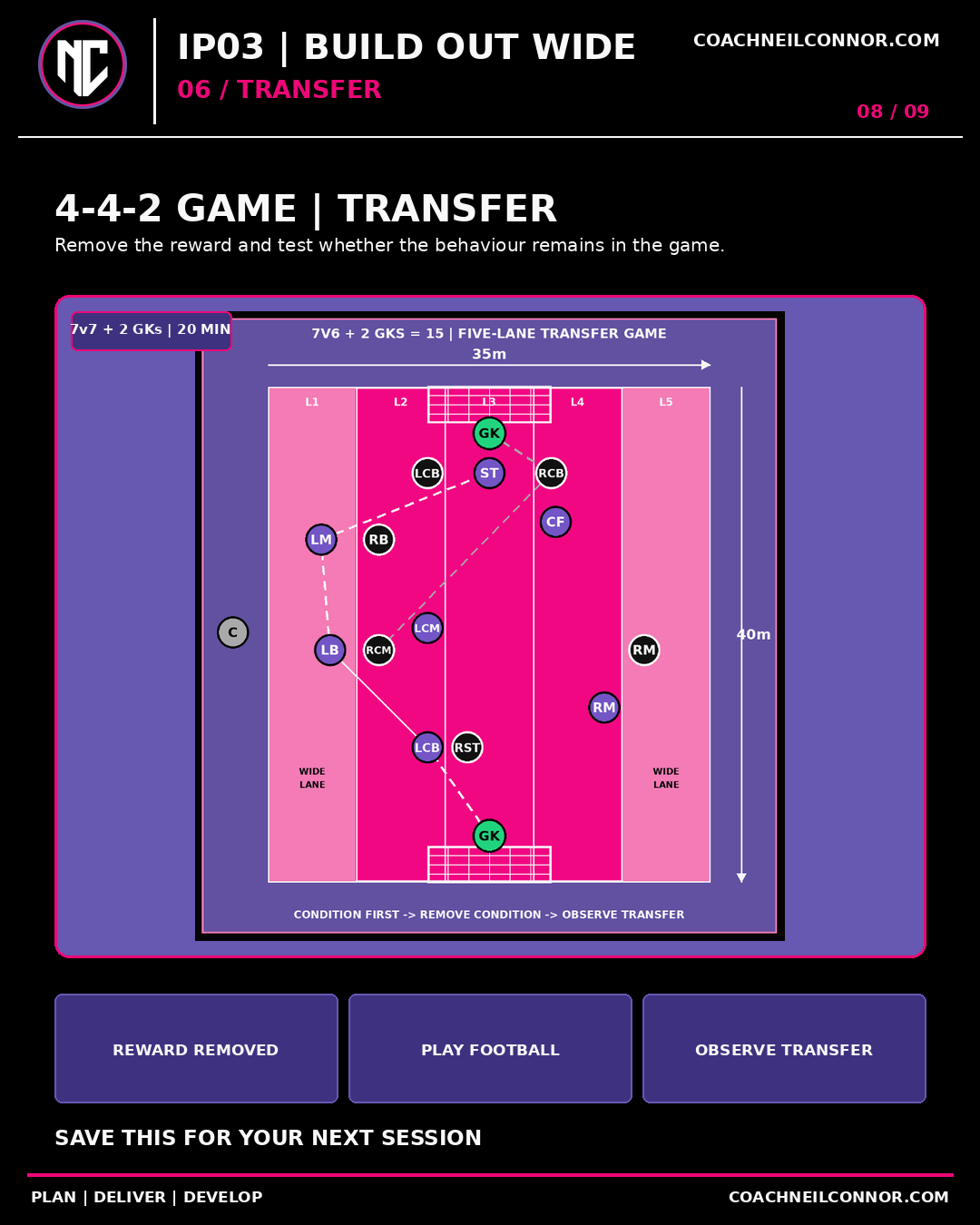
The top format label shows the intended 7v7 + 2 goalkeepers transfer game. Adapt the numbers while preserving two teams, direction and realistic wide decisions.
Remove the wide reward and allow the game to test whether the players still recognise central protection, create the outside overload and progress from it.
Observe before intervening
- Does the team still use width when there is no additional reward?
- Can the spare player receive with a forward picture?
- Does the next action threaten the next line or return inside with purpose?
Player debrief — Reflect
Free · Reflection · 3 minutes
Whole group · Adaptable
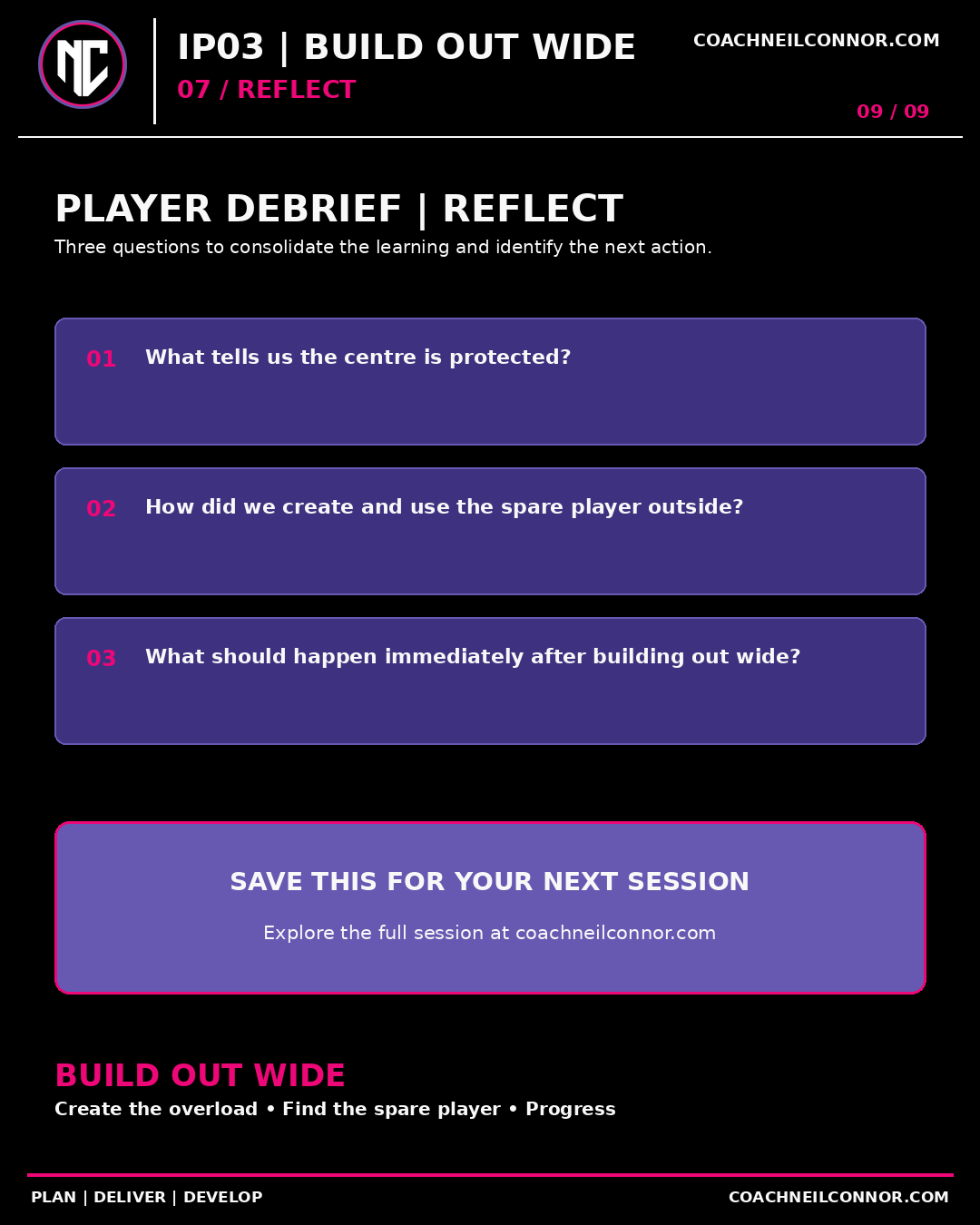
Finish with three questions: What showed that the centre was protected? How did the team create and use the spare player outside? What should happen immediately after building out wide?